
The Teacher Has to Go First
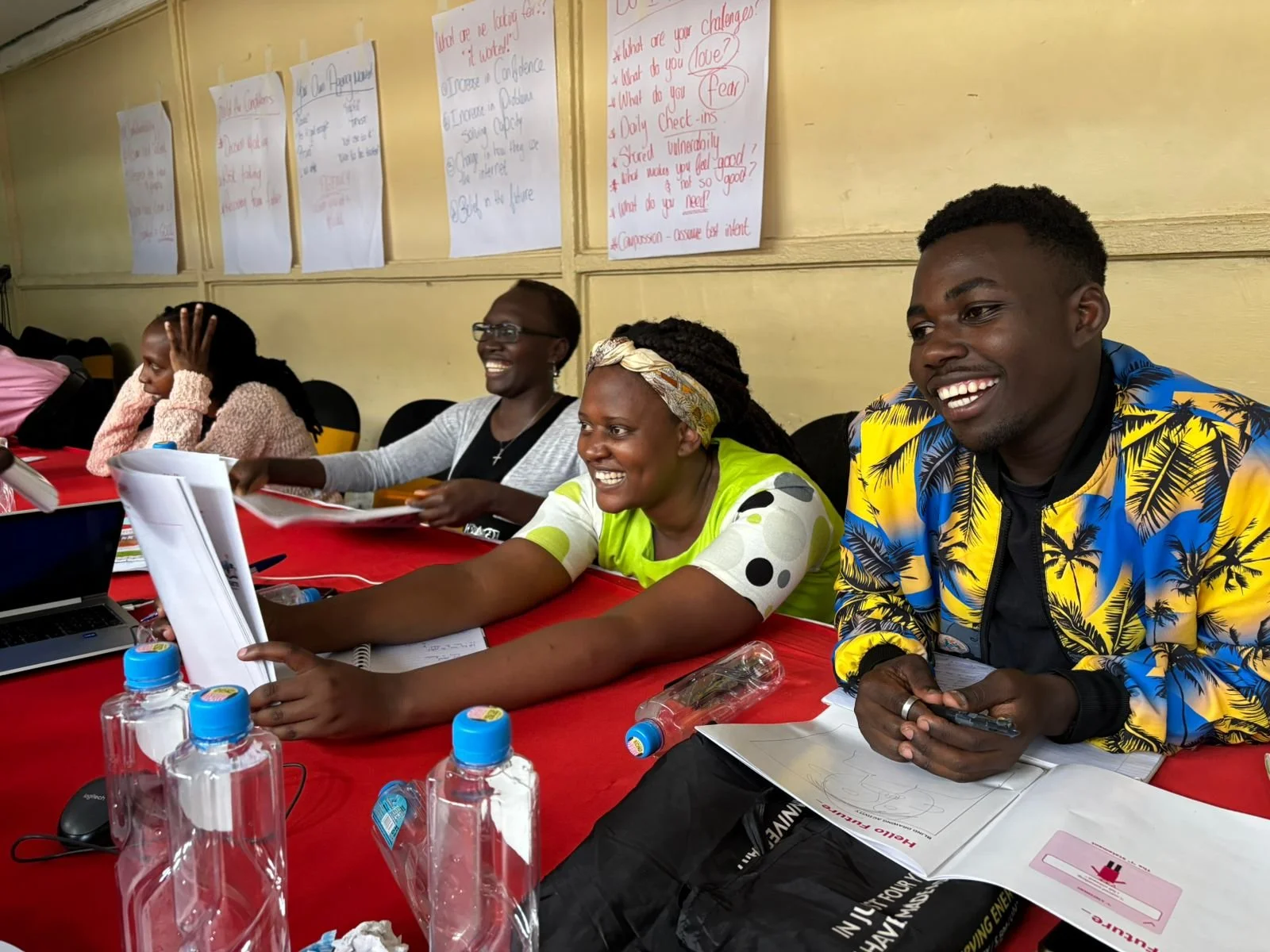
This Spring, Hello Future expanded into East Africa — Tanzania, Uganda, Kenya, and Malawi — four countries, four partner organizations, four rooms full of teachers being asked to do something different than what they are used to. Tanzania went smoothly. Uganda is the interesting case.
Day one in Uganda was moderately okay. It was day two where things got interesting. Overnight, the trainees were assigned a short reading assignment — a very accessible essay by philosopher C. Thi Nguyen on the three roles every teacher simultaneously occupies: teacher, bureaucrat, and cop. Most of the participants arrived at day two without having read it. They looked at it, saw a thousand words, and decided the football match was more important.
Hesta, our Director of Global Programs and Partnerships, summarized it for them and kept the day moving.
The Nguyen argument matters because it names something these teachers live without having language for. His claim is that fairness and enforcement — the bureaucrat and the cop — will reliably crowd out the teacher. Not because teachers are cynical. Because control is structural. When you are the only person responsible for what happens in that room and the room is genuinely hard, authority becomes the easiest tool.
The teachers in that room work with refugee students from DRC, South Sudan, Burundi, Somalia. They described classrooms where students arrived visibly under the influence, where disagreements became violent without warning. That is not a difficult classroom in the ordinary sense. That is a room carrying a level of collective trauma that most pedagogical frameworks were never designed to address. The armor these teachers have built is not laziness or institutional conditioning. It is a survival response to an environment that demands it.
Which is also why one of them, during the fixed and open mindset section, said what he said.
So you're saying we should not break a student down in order to build them up later?
That is not a fixed mindset. That is a belief about what teaching is. Someone in that room had concluded, through hard experience, that breaking down a student is a legitimate first step toward building one up. That is not a belief you shift in a day. It may not be a belief you shift in three.
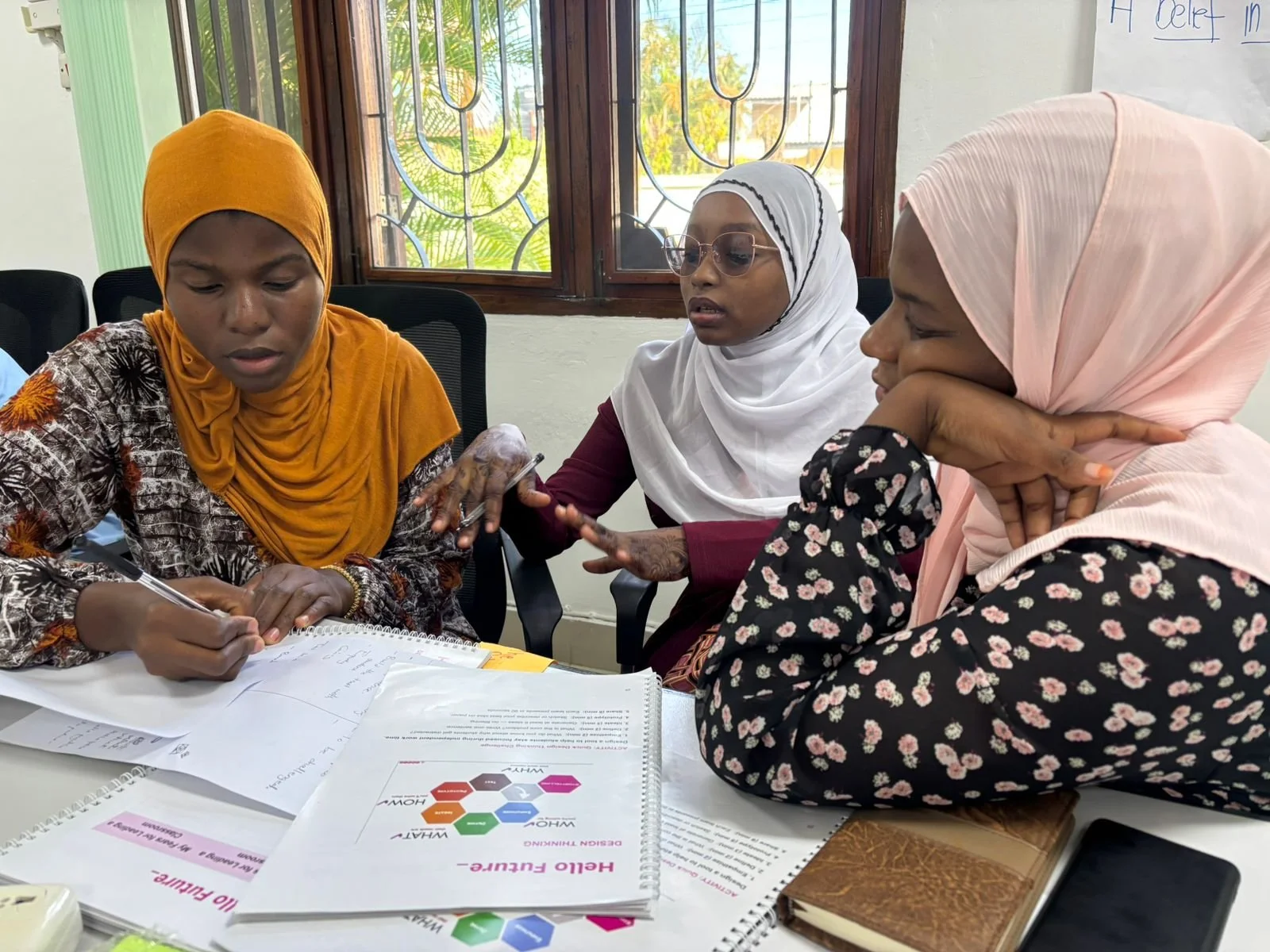
Hello Future's training is structured around a central premise that Parker J. Palmer articulates better than we do: who you are is how you teach. The curriculum, the project-based learning methodology, the leadership framework woven through the three days — all of it rests on the same load-bearing assumption. You cannot ask a teacher to give students something the teacher has never been given themselves, namely agency. You cannot model what you have not experienced. The classroom a teacher creates is not a product of their training. It is a reflection of their relationship to their own authority, their own capacity to be uncertain, their own experience of being seen or not seen by someone who held power over them.
Seeing that power was not just a subtext in this training room but the text, Hesta asked the trainees to go somewhere most professional development never goes. Think of a moment when you were at your lowest in a classroom — as a student, not a teacher. What did you need?
The room went quiet in the way rooms go quiet when a question lands somewhere real.
A project-based learning classroom is, at its core, an exercise in power sharing. That thread runs through all three days. It also runs directly into one of the most charged dynamics in the room — because power is not an abstract concept for teachers working in this context. It is political. It is historical. It is personal in ways the training design has to account for and cannot fully resolve.
Situated as their younger selves, most of the participants came to embrace the need for power sharing, that genuine empowerment cannot exist without it.
Yet one participant pushed back hard. "I think it's a big and wrong mistake — when you share power with people, they may end up abusing it."
Then, unprompted, he offered his own opposing perspective.
"But let's now go into another perspective of sharing power and say how good it is."
He announced his own pivot. Nobody asked him to. He worked through confidence, through being heard, through what it means for a student to have genuine authority over their own work. And then he went somewhere the training didn't put him.
Especially in Africa, our leaders here — they take power like a personal issue. Even if I die, it's my son or my daughter who leads. We don't think of empowering other people.
He brought the political frame. Not Hello Future. Not Hesta. He looked at power in a classroom and recognized the same structure he lives inside every day. Then he closed with this:
When you share, you are empowering someone.
Hesta didn't get him there. The question did. The group did. He did.
In Kenya, after the first day of training, one of the participants said she thought she was coming to learn about AI but it felt more like a psychology session instead.
She was right on both counts. It is a psychology session. That is not a detour from the content — it is the frame that makes the content evergreen. You cannot teach AI literacy, or media literacy, or any of the other things the Hello Future curriculum covers, without first addressing the relationship between the person in front of the room and the people in the seats. Who you are is how you teach. If that feels like psychology, it is because it is.
Here is the structural problem the sector does not want to name: we do not invest in teachers. Not truly. A one-day training-of-trainers is the norm. You attend, you receive a certificate, you go back to your classroom and do what you always did — because one day was never going to change what you have always done. One day is not enough to make you a content expert or change your approach to teaching. The certificate-seeking is rational. Credentials are valued in a world where real power is scarce. But the learning stays thin because the investment is thin.
Our three-day TOT is long by sector standards and it barely scratches the surface. We have designed around both the need and the known constraints — the in-person training handles the hardest things, the things that require a room: pedagogy, power, leadership, the work that cannot be delivered through a screen or a manual. A custom AI assistant handles content questions at any hour in any language. Live weekly remote helpdesk sessions provide ongoing coaching throughout implementation.
But the underlying problem is not a design problem. It is a values problem. When we mistake information transmission for learning, we will always value tools and tricks over the work of true development — in teachers, and by extension in the youth they serve. The most vocal opponent to power sharing in the Uganda training argued himself into a different understanding of power. That took three days and a skilled facilitator and a room full of colleagues willing to do the intellectual work together. No certificate captures that.
What we are learning, country by country, is not that the methodology needs adjustment for context. It is that the methodology is exactly what the context requires — and that getting there asks something of teachers that nothing in their training has ever asked before.
Walk the road yourself before you ask your students to walk it.
That is the thing that ensures we create a classroom that transforms.