
What Localization Actually Requires
For years, some of the young people Hello Future worked with in the Kurdistan Region of Iraq wouldn't let us photograph them or they came up with creative ways to not show their faces. Their social media profiles ran on cartoon avatars — a deliberate distance between their face and the internet. This was before deepfakes. Before AI-generated imagery. Before the apps that can now produce sexualized content from a single photo scraped from somewhere you don't remember posting.
The instinct was correct. Visibility in an environment you can't fully trust carries a cost.
Building Decoding Media — our media literacy course addressing technology-facilitated gender-based violence (TFGBV) and the broader AI saturated media environment of 2026 — started there. With what young people already knew. And with the question of how to build something that could travel across wildly different contexts without losing what made it rea
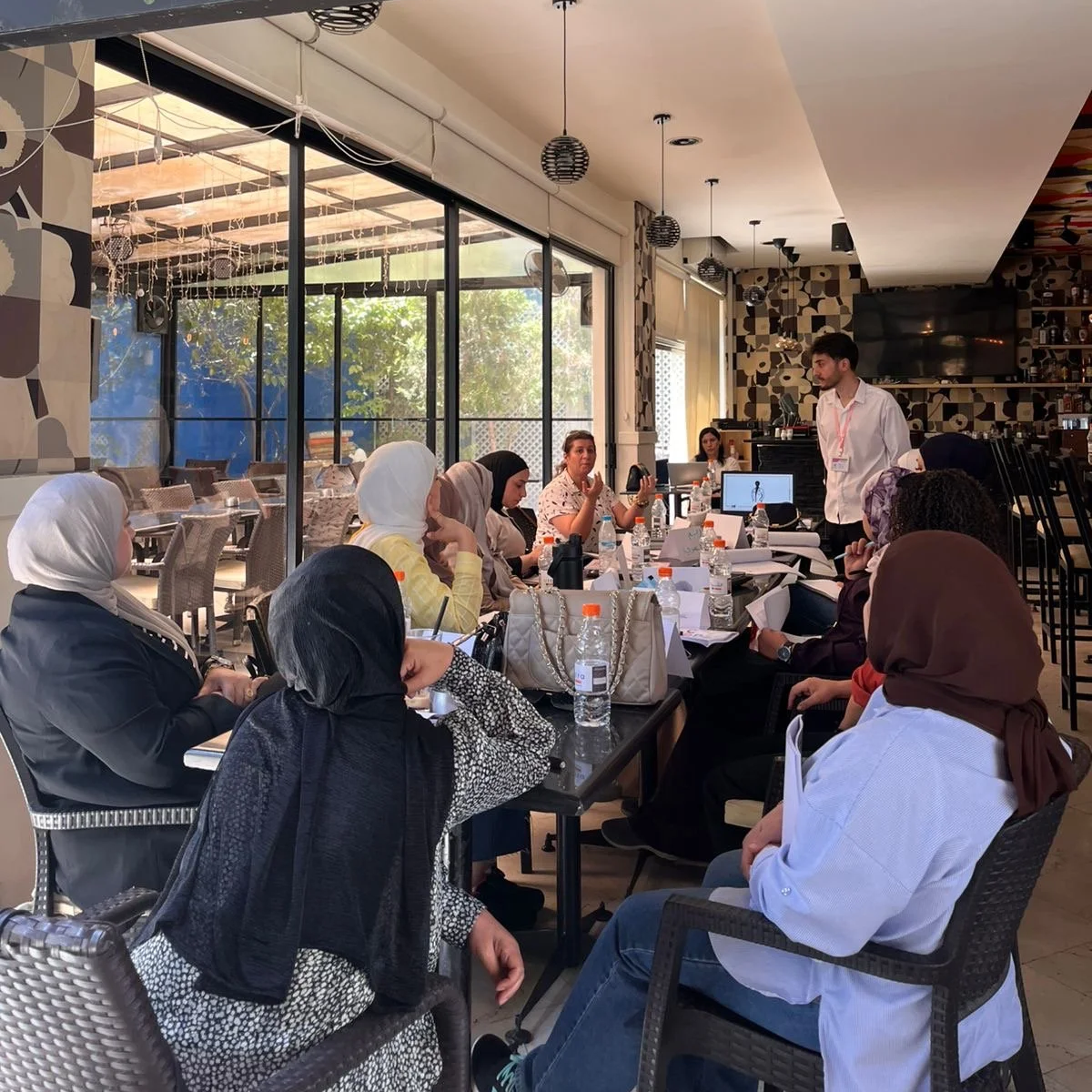
That turns out to be the hardest design problem in the course. Not the TFGBV content itself. Not the AI literacy framework. The localization.
A course about media, power, and technology is complicated anywhere. Built for young people across the Middle East, East Africa, and South Asia simultaneously, the same questions surface in every context — about women's rights, shame, and autonomy — wearing different faces. These are not peripheral considerations. They are the terrain.
Take surveillance. Lesson 8 asks students to examine who monitors their digital lives and why. In many Western contexts that question has a relatively clean frame: your data, your privacy, your rights. In a conservative Middle Eastern context, the same question lands inside a family structure where monitoring is understood as an expression of love — and a curriculum that treats family oversight as a problem to be escaped will lose the room before the lesson starts.
The instructor has to know which frame they're working in first. A classroom operating inside a shame-based culture requires a different entry point than one where the dominant language is individual rights. The content is the same. What shifts is the instructor's awareness of the primary motivator in the room, and which door they use to walk students toward the same destination.
The second thing: language requires the same level of precision. In conservative contexts, "empowerment" becomes "capability." "Women's rights" becomes "everyone's rights." "Liberation" becomes "choice." These are not euphemisms — they are the difference between a curriculum that reads as a foreign values import and one that a Jordanian instructor can teach to a classroom of Syrian refugee girls without asking anyone to argue against their own community before the lesson has even started.The point is not to dilute the underlying issue. The goal is not to soften the truth. It is to make it reachable.
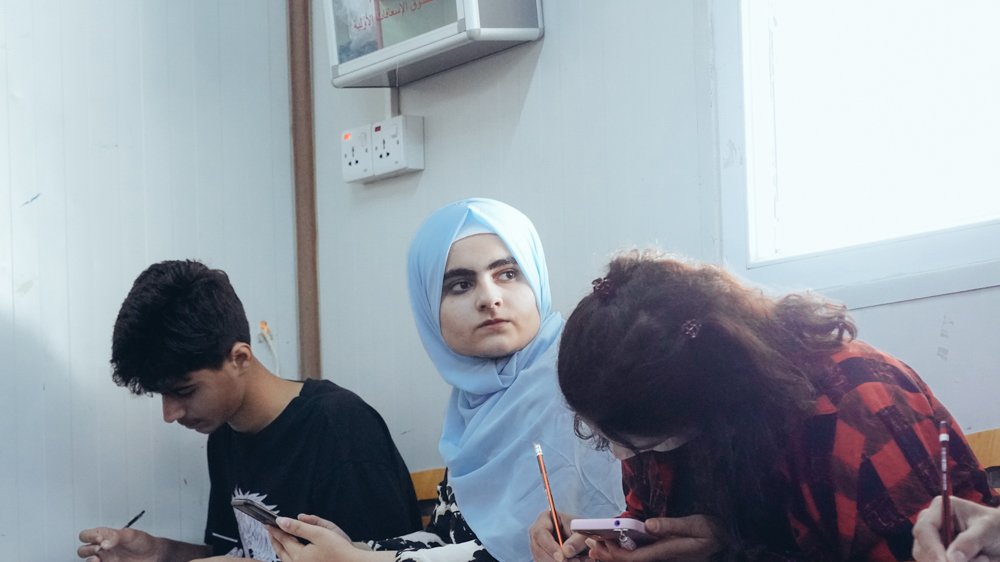
Decoding Media runs on a three-tier cultural adaptation system: Universal, Moderate, and Progressive. Implementing partners choose what's appropriate for their context and their students — and the choice isn't fixed across the course. An organization might run Universal content for the media analysis lessons and move to Moderate for the surveillance and TFGBV material. The tier is a starting point for each lesson, not a track the whole course runs on. What a classroom can hold in week one is not what it can hold in week four.
---
Most localization frameworks in this sector are subtraction models. Identify the sensitive content, remove or soften it for conservative contexts, proceed. What you get is a course that has been made less uncomfortable without being made more appropriate. The friction has been removed. So has most of the substance.
The three-tier system starts from a different premise. The content most likely to cause friction in a given context is usually the content that context most needs — and delivering it requires understanding the specific social conditions well enough to design for them, not around them.
The goal was never immunity; that's impossible. The information environment is moving faster than any curriculum can track. The course doesn't promise that students will always know. What it does is build the reflex — the pause before the share, the question before the click, the habit of asking rather than assuming. Healthy skepticism as a durable skill in a landscape where certainty isn't available to anyone.
That reflex has to be built inside the realities students actually live in.