
Fear is Not a Framework
The field got the signal right. Over the past year, we started to see RPFs naming Technology-Facilitated Gender-Based Violence (TFGBV) explicitly. Partners started asking about it. Funders found it interesting.
What nobody had worked out was what to actually do about it.
We hadn't either. We were in the middle of writing our Media in the Age of AI course when TFGBV came up repeatedly in conversation. Incorporating it made sense — we were already halfway there. What we didn't expect was the first draft. It scared us.
We led with the threat, named the harm, showed them what was possible. That was the wrong move.
The threat is real and it is moving faster than most practitioners have caught up with. There are apps now that generate sexualized imagery of a person without that person having uploaded a single photo. Your face exists somewhere on the internet. That is sufficient. The predicate that used to exist — a mistake, a moment of misplaced trust, something shared that shouldn't have been — is gone.
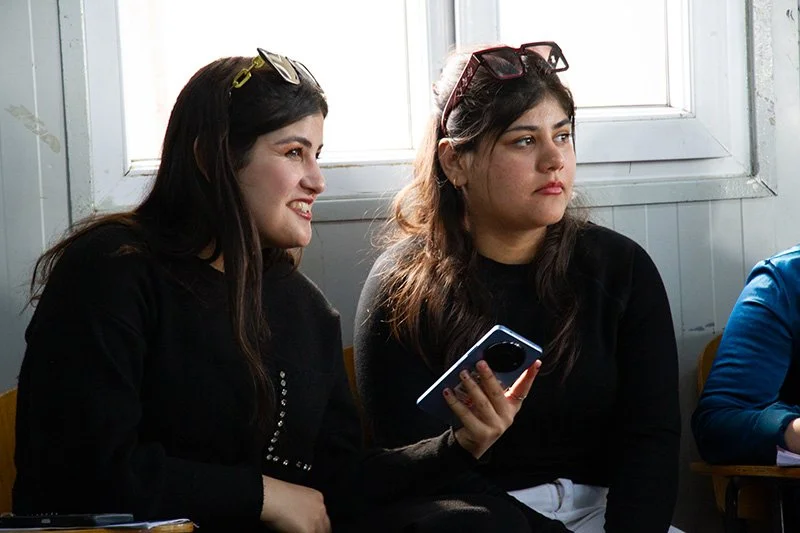
This is not a gender-neutral problem. It falls disproportionately on women and girls, and hardest on the youngest ones. Most young women who have experienced TFGBV report their first exposure before the age of fifteen. The mechanisms vary. The logic doesn't. It is about control.
For the young women Hello Future works with, the exposure is compounded by the specific conditions of their lives — disrupted social networks, constrained legal status, a digital footprint that often contains documentation of their displacement and their family's location. Block, report, step away assumes a social and institutional redundancy most of these young women don't have.
And for young women in conservative contexts, the freedom to participate in digital life is already negotiated, already conditional, already smaller than it should be. An intervention built around fear doesn't protect that freedom. It confirms the argument for restricting it. Leading with worst-case scenarios hands the most controlling voices in a young woman's life exactly the evidence they were looking for.
That is not safety. That is the noose, tightened by people who meant well
Anti-trafficking work built its entire infrastructure around the wrong end of the problem. Decades of investment in identification, rescue, aftermath. Chronic underinvestment in prevention — slower, harder to measure, no rescue narrative to show funders. TFGBV is tracking the same pattern. The RPFs, the partner appetite, the funder interest — all of it oriented toward response. Reporting mechanisms, legal frameworks, platform accountability are necessary and insufficient.
The good parent names the danger because the danger is real. But a young person who has only ever been told what can hurt her hasn't been given tools. She's been given fear. Fear, in the specific context of technology, produces avoidance or paralysis — neither of which is available when digital connectivity isn't optional infrastructure. It is survival infrastructure in 2026.
—
TFGBV is not a technology problem. It is a power problem that technology has made faster, cheaper, and harder to escape. The barrier to entry for causing serious harm to another person's life has been lowered to nearly nothing. The impulse is the only threshold that remains.
A framework built around threat identification teaches young people to recognize harm. A framework built around power teaches them to understand the conditions that produce it. Not the same thing. The first produces vigilance. The second produces capacity.
For many of the young people most exposed to TFGBV, the conditions that make them vulnerable extend well beyond the screen — poverty, legal precarity, and the near-total absence of institutional recourse compound every dimension of the harm. A program delivered inside an institution that hasn't examined its own power dynamics will teach young women to identify harm on their phones while leaving the larger conditions unchanged. This is the design problem most programming avoids.
—
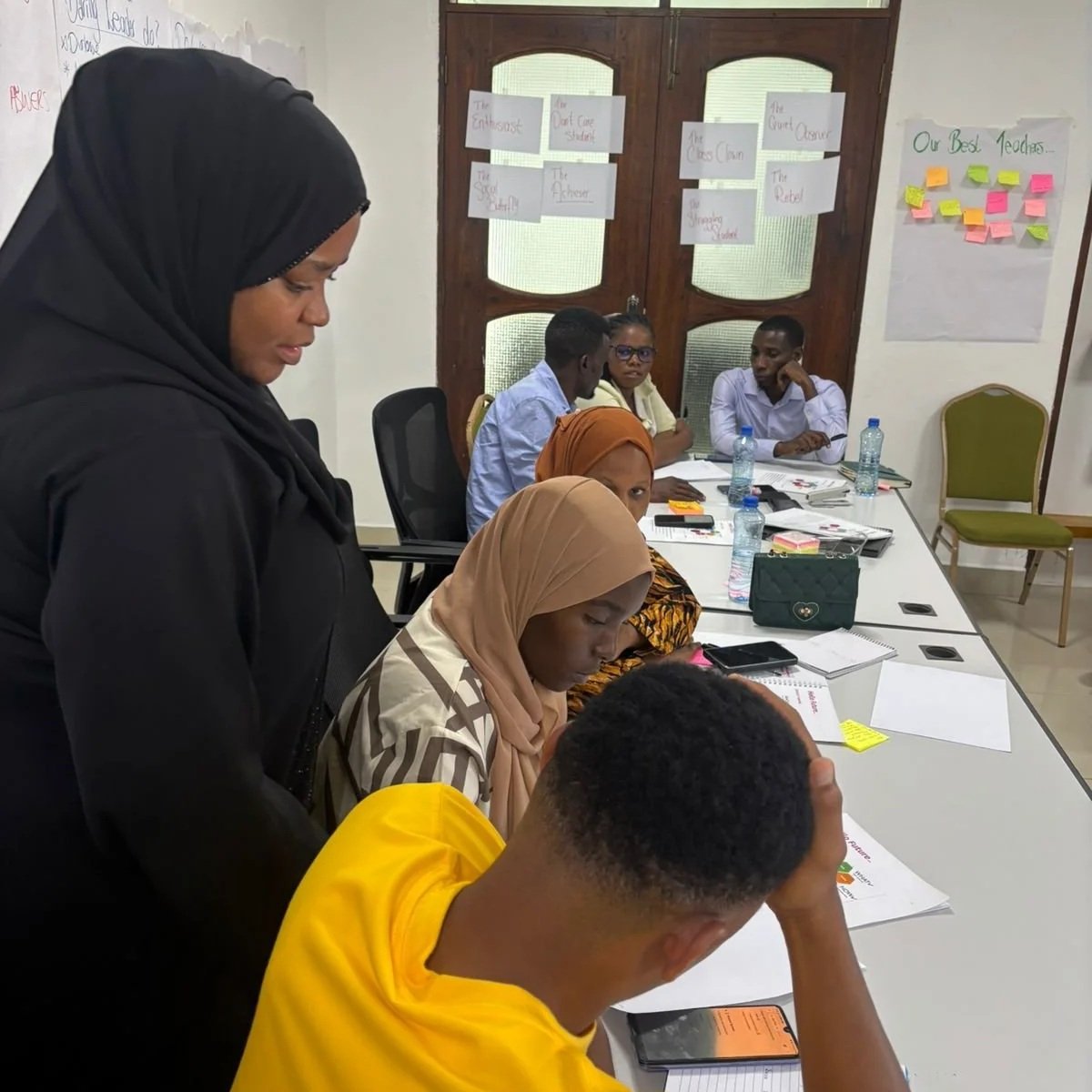
Decoding Media doesn't lead with TFGBV. Students are treated as analysts — building a framework for evaluating information, understanding how synthetic content is made and circulates, developing language for what they're seeing. The TFGBV material arrives in that context. Not as a warning. As an application of skills being built.
The field got the signal right. The work now is to get the framework right. That means starting not with the threat, but with the person.